

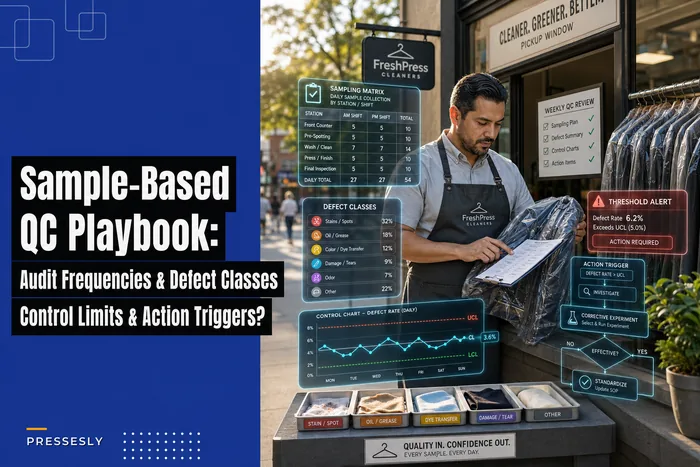
Sample‑Based QC for Dry Cleaners: Audit Frequencies, Defect Classes and Action Triggers
Sampling frequency templates, defect classification, control limits and action-trigger thresholds tied to corrective experiments for small shops.

Actionable dry cleaning business insights, streamlined order tracking, customer retention techniques, staff scheduling solutions, AI-driven operational analytics, and practical growth strategies for modern garment care providers.
Sampling frequency templates, defect classification, control limits and action-trigger thresholds tied to corrective experiments for small shops.
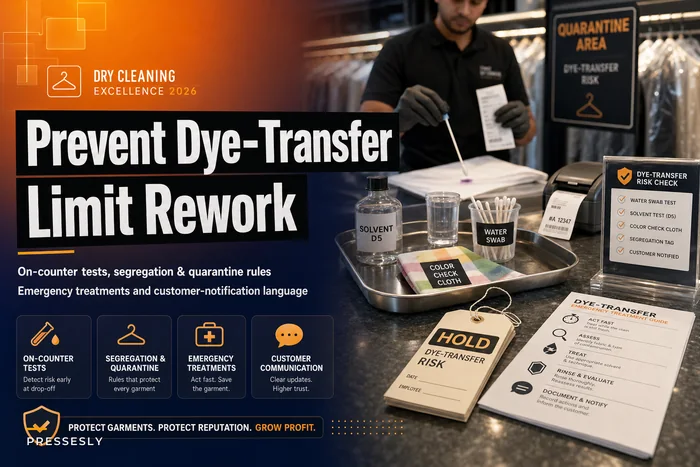
On-counter tests, segregation rules, quarantine protocols, emergency treatments and customer-notification language to limit rework and claims.
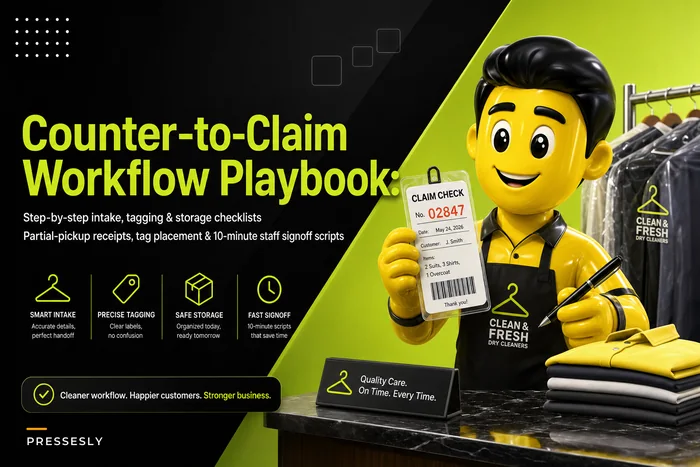
A practical, step‑by‑step operational brief that walks staff through intake, tagging, processing, partial pickups and final claim signoff to minimize lost garments and customer disputes. Includes a front‑counter intake script and printable receipt layout, exact tag content & placement standards (with low‑cost options), a POS and paper-based partial‑pickup SOP with sample receipts and storage conventions, a 3–5 line micro‑script staff signoff ritual for each stage, basic KPIs and reconciliation cadence, a privacy/consent blurb, plus a Week 1/2/4 implementation checklist and equipment/cost estimates.
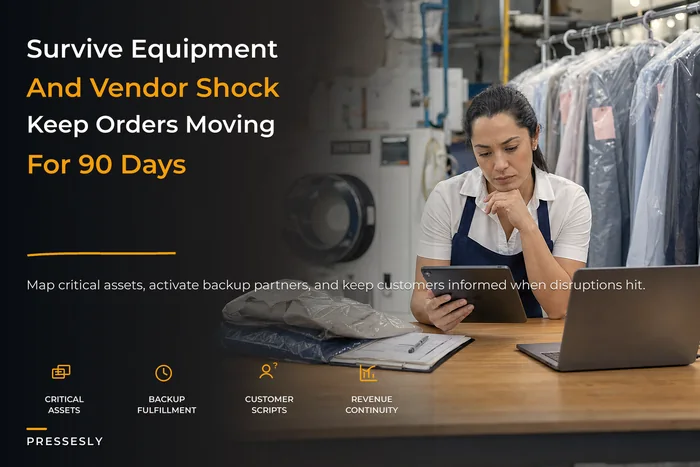
A 90‑day resilience playbook: critical-asset map, minimum-viable operations checklist, temporary fulfillment options, quick vendor-substitution playbooks and customer-communication scripts tuned to single shops.
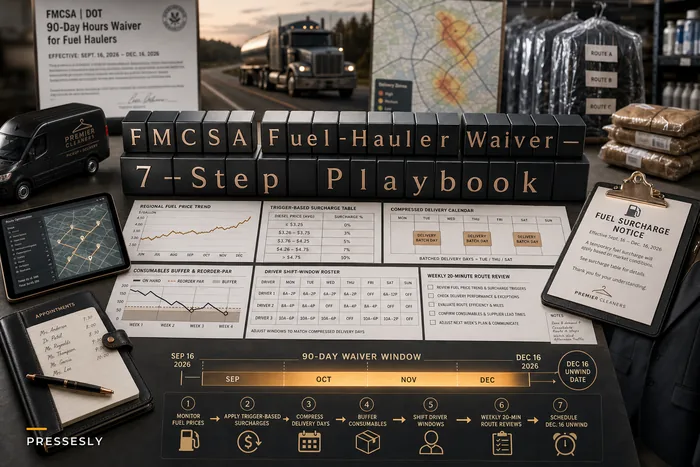
Explain the Sept 2026 FMCSA/DOT 90‑day hours waiver for fuel haulers, the likely near‑term effects on local fuel availability and pricing, and give a concise seven‑item operational checklist: temporary fuel‑surcharge rules and messaging, tighter delivery batching and zone mapping, short‑run staffing/shift tweaks, supplier‑par and reorder cadence adjustments, priority SLA rules for profitable orders, routing heuristics to reduce miles, and customer communication templates to reset expectations.
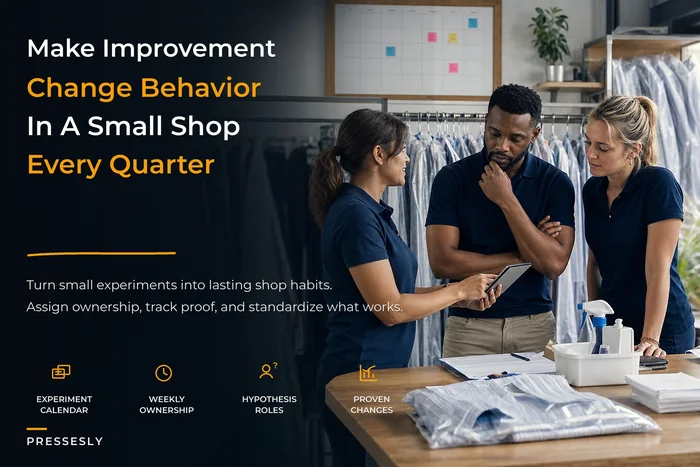
Quarterly experiment calendar, hypothesis templates, sample-based QC integration and ownership routines tailored to 2–15 person shops. Includes audit links, experiment tracking templates and ownership cadences.
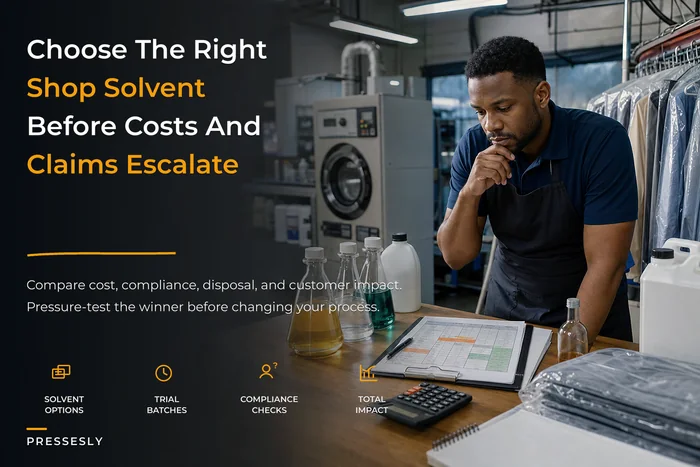
Decision matrix weighing solvent tradeoffs, disposal/recycling options, cost-impact calculator and customer-facing sustainability claims with guardrails. Includes cost & compliance implications and a simple ROI calculator for solvent changes.

Stepwise integration sequence tied to operational priorities and ROI triggers (orders → inventory → payments → delivery). Minimal data model, phased rollout plan, vendor-selection checklist, cutover guards and ROI thresholds for single-site shops.

Estimate templates, priority lanes, TAT coordination with cleaning throughput and policies for third‑party tailors to protect margins.